 \n
\n"How much does AV cost?" is the single most common question we hear from event planners, marketing directors and corporate communications teams. And we understand why - AV production is one of the largest line items on any corporate event budget, yet it is also one of the most opaque. Unlike catering, where you can calculate a per-head cost or venue rental, where the price is posted on a website, AV production pricing depends on dozens of interconnected variables that make it genuinely difficult to estimate without professional input.
At FPC (Flo Production Consulting Inc.), we have quoted and produced over 500 show days across 13+ years for more than 100 brands - from intimate pharmaceutical advisory boards to large-scale automotive launches for Ferrari and Porsche. This guide draws on that real-world experience to give you the most transparent and actionable breakdown of corporate event AV costs available anywhere in 2026.
- Corporate Event AV Pricing Tiers
- Tier 1: Basic Setup - $5,000 to $15,000
- Tier 2: Mid-Range Production - $15,000 to $50,000
- Tier 3: Premium Production - $50,000 to $100,000
- Tier 4: Large-Scale Production - $100,000+
- What Actually Drives Costs
- Hidden Costs Most Planners Miss
- Getting the Most Value from Your AV Budget
- Rental House vs. Production Consultant: The Real Cost Difference
Corporate Event AV Pricing Tiers
Tier 1: Basic Setup - $5,000 to $15,000
A Tier 1 AV production is appropriate for corporate meetings, training sessions, board presentations and small-scale conferences with 30 to 150 attendees in a single room. At this level, you are investing in clean, professional audiovisual delivery without extensive creative production elements.
What is typically included at this tier:
Audio: A small to mid-size PA system (powered speakers such as QSC K-series or JBL SRX), two to four wireless handheld or lavalier microphones (Shure or Sennheiser) and a basic mixing console for level management. Audio coverage is designed for the room size - typically a hotel meeting room or corporate conference facility.
Video: A single projection screen (8 to 12 feet wide) with a laser projector rated at 6,000 to 10,000 lumens, a confidence monitor on stage for the presenter and a basic laptop switching system that handles input from one or two presenter laptops. Some Tier 1 setups substitute a large-format LED display (75 to 98 inches) for the projector and screen, particularly in smaller boardroom-style configurations.
Lighting: Minimal supplemental lighting - typically a few LED uplights for ambiance and basic front wash fixtures to ensure the presenter is properly lit for any photography or simple video recording. Many Tier 1 events rely partially on the venue's existing house lighting, with supplemental fixtures added only where needed.
Crew: One to two technicians who handle setup, operation and strike. At this level, a single experienced AV tech can often manage audio, video and basic lighting simultaneously.
What is NOT included at this tier: LED video walls, intelligent lighting, rigging, live streaming, multi-camera production, custom graphics or a dedicated technical director. If your event requires any of these elements, you are looking at Tier 2 or above.
Tier 2: Mid-Range Production - $15,000 to $50,000
Tier 2 is where the majority of corporate events land. This tier covers general sessions, annual conferences, product presentations, town halls and hybrid events with 100 to 500 attendees. At this level, the production starts to feel polished and intentional rather than simply functional.
Audio: A properly designed PA system - potentially a small line array (d&b audiotechnik E-series or JBL VTX A8) for larger rooms - with six to twelve wireless microphone channels, a dedicated audio engineer operating a digital mixing console (Yamaha CL or Allen & Heath dLive), stage monitors or in-ear monitor systems for presenters and program audio distribution to recording and streaming systems.
Video: Dual projection screens or a mid-size LED video wall (approximately 12 to 20 feet wide), a media server (Disguise or Resolume) for content playback, a video switching system (Ross Carbonite or Blackmagic ATEM) with two to four input sources, confidence monitors on stage and potentially one or two PTZ cameras for IMAG (image magnification) or recording.
Lighting: A designed lighting package with front wash, back light and colored accent lighting. This typically includes 15 to 40 LED fixtures controlled by a lighting console (grandMA3 or ChamSys), with programmed cues for different segments of the program - opening, keynotes, panels, breakout transitions and closing.
Streaming: A single-camera or dual-camera live stream with basic branded overlays, dedicated encoding hardware and redundant internet connectivity. The stream is delivered to a platform like Vimeo, YouTube Live or a corporate virtual event platform.
Crew: Three to six technicians, including a dedicated audio engineer, video/playback operator, lighting programmer and potentially a streaming technician. At the upper end of Tier 2, a technical director or show caller begins to coordinate the crew.
Tier 3: Premium Production - $50,000 to $100,000
Tier 3 productions are high-impact events where the audiovisual experience is a core component of the event's brand impact and audience engagement strategy. This tier covers major product launches, large-scale customer conferences, executive summits, investor days and awards galas with 300 to 1,500 attendees.
Audio: A full line array PA system (d&b audiotechnik J-series, L-Acoustics K2 or similar) with dedicated sub-bass, front fills and delay systems for large rooms. Twelve or more wireless microphone channels, a dedicated A1 audio engineer with an A2 stage technician and broadcast-quality audio splits for recording and streaming.
Video: Large-format LED video walls - potentially a main screen of 24 to 40 feet wide with side screens or scenic LED accents - driven by Disguise media servers. A full video switching workflow with a dedicated V1 operator (technical director), multiple manned and PTZ cameras for IMAG and streaming, real-time graphics generation with lower thirds, name straps and branded overlays and dedicated playback systems for pre-produced video content.
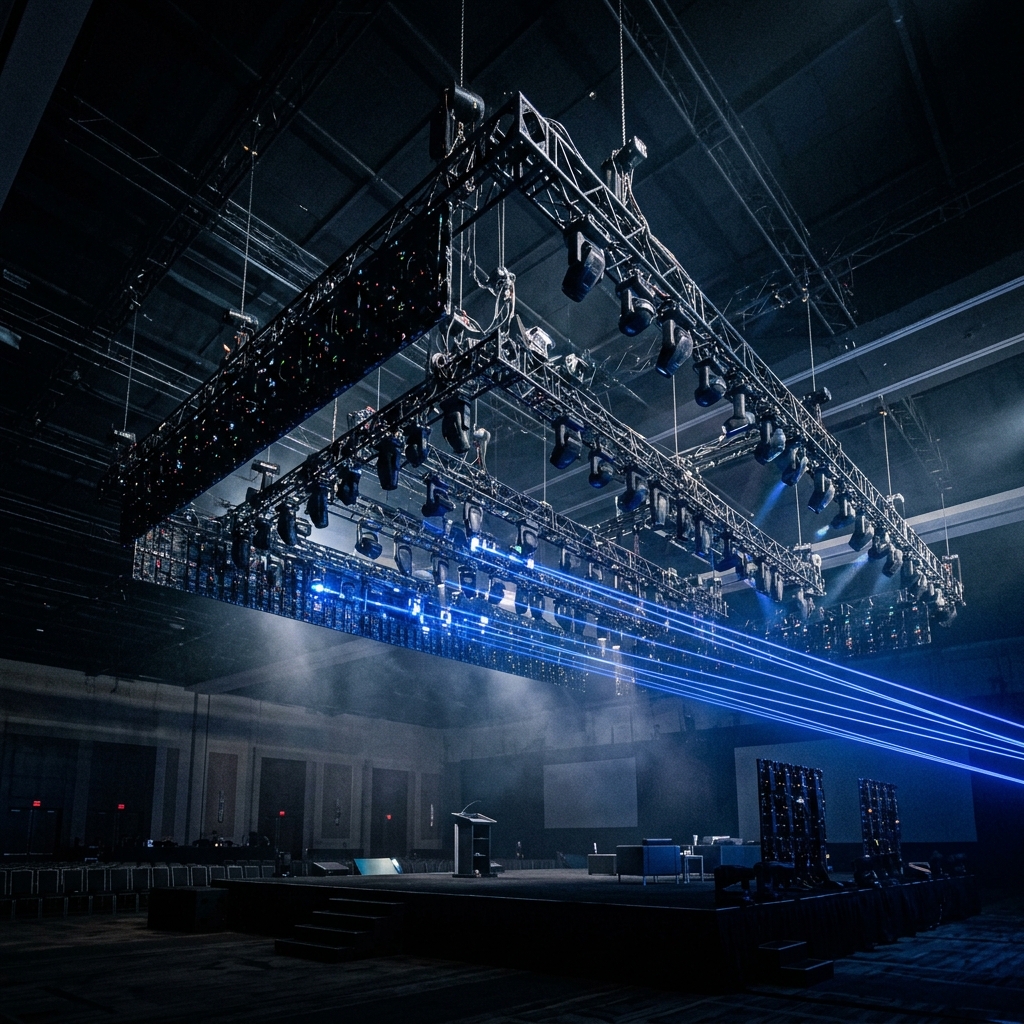
Lighting: A comprehensive lighting design with 40 to 100+ fixtures, including moving heads (Martin MAC Viper, Robe BMFL or similar), LED wash fixtures, profile spots and atmospheric effects (haze, gobo projections). A dedicated lighting designer programs and operates the show from a grandMA3 console, with lighting cues precisely timed to the program flow.
Rigging: Professional rigging with chain motors, truss structures and certified riggers supporting the LED walls, speaker arrays, lighting fixtures and any scenic elements suspended overhead. A custom-built stage with stairs, ramp access and branded scenic elements.
Streaming: Multi-camera, broadcast-quality live streaming with picture-in-picture layouts, branded graphics packages, audience engagement tools (polling, Q&A, chat moderation) and dedicated streaming engineer. Redundant encoding and bonded cellular backup connectivity.
Crew: Eight to fifteen technicians plus a technical director/show caller who coordinates the entire production from a dedicated front-of-house position. At this tier, every discipline has its own specialist or team.
Ready to Elevate Your Next Event?
FPC delivers flawless AV production for corporate keynotes, product launches and hybrid conferences.
Get a Production QuoteTier 4: Large-Scale Production - $100,000+
Tier 4 represents the top end of corporate event production - major conferences with thousands of attendees, multi-day events with dozens of breakout rooms, high-profile product reveals, celebrity-hosted galas and brand activations where the production IS the experience. These are the events where our work for brands like Ferrari, Porsche, the NFL and Mobile World Congress lives.
What distinguishes Tier 4: Multiple LED surfaces totaling hundreds of square feet (often including ceiling-mounted, scenic or wrapping configurations), full concert-grade audio systems, intelligent lighting rigs with 100+ fixtures, complex rigging including automation and motorized scenic elements, multi-camera broadcast production with dedicated director and camera operators, simultaneous streaming to multiple platforms and regions and production management teams that coordinate with scenic designers, content producers, entertainment acts and venue operations.
At this level, the production team often numbers 20 to 50+ crew members across multiple load-in days, with advance planning that begins months before the event. The AV budget at Tier 4 can range from $100,000 to well over $500,000 depending on the scope, technology requirements and event duration.
What Actually Drives Costs
Understanding the cost drivers behind AV production pricing is essential for effective budgeting. Here are the primary factors that determine where your event falls on the pricing spectrum:
Venue size and acoustics. A 200-person conference in a purpose-built convention center ballroom with built-in rigging points costs significantly less than the same event in a raw warehouse space or a hotel ballroom with low ceilings and no rigging infrastructure. The venue dictates equipment choices, crew requirements and setup complexity.
Display technology. This is often the single largest line item in the AV budget. An LED video wall costs roughly $800 to $2,500 per panel per day depending on pixel pitch, resolution and quantity - and a large stage display can require 100 to 300+ panels. By comparison, a high-lumen laser projector and screen package might cost $3,000 to $8,000 per day for comparable image size, but with lower visual impact.
Number of show days vs. prep days. The equipment rental cost for a three-day conference is not three times the cost of a one-day event. Equipment is typically priced on a weekly rate (often 3-day week), so a three-day event costs only marginally more in equipment than a one-day event. However, labor costs scale linearly with days and crew calls for load-in, rehearsal and strike add significant cost. A one-day event with a one-day load-in and a half-day strike requires 2.5 crew days per technician - the event day itself represents less than half the total labor cost.
Crew specialization. A generalist AV tech costs $400 to $700 per day. A specialist lighting designer, A1 audio engineer or technical director commands $800 to $1,500+ per day. The crew mix - generalists vs. specialists - has a major impact on the total labor line.
Content complexity. A presentation with static PowerPoint slides on a single screen requires minimal playback infrastructure. A show with pre-produced video, real-time motion graphics, interactive audience polling displayed on screen and live camera IMAG requires media servers, graphics systems and additional operators that add $5,000 to $20,000+ to the production budget.
Streaming and hybrid requirements. Adding a basic single-camera stream to an existing production adds $3,000 to $8,000. A full multi-camera, broadcast-quality hybrid event with branded graphics, engagement tools and dedicated platform integration can add $10,000 to $25,000 or more.
Hidden Costs Most Planners Miss
After producing events for over 100 brands, we have identified the costs that consistently surprise first-time event planners and even experienced ones who have not worked with transparent production partners before:
Venue power and rigging fees. Many convention centers and hotels charge separately for electrical power drops, rigging point access and internet connectivity. Power costs alone can add $2,000 to $10,000+ depending on the production's electrical requirements. We have seen venues charge $500 per rigging point per day - and a mid-size production might need 20 to 40 rigging points.
Freight and trucking. Equipment does not magically appear at your venue. Freight costs for transporting a mid-size production's worth of gear - speakers, LED panels, lighting fixtures, truss, staging and cases - typically run $2,000 to $8,000 depending on distance and volume. For large-scale productions requiring multiple 53-foot trailers, freight can exceed $15,000.
Crew travel and accommodation. If your event is outside the production company's home market, crew travel, flights, hotels, per diems and ground transportation add up quickly. A crew of 10 technicians traveling to a three-day event in another city can add $15,000 to $25,000 in travel costs alone.
Overtime and extended days. Standard crew calls are typically 10 hours. Events that run longer - late-night galas, early-morning rehearsals or extended load-in shifts - incur overtime rates, typically 1.5x after 10 hours and 2x after 12 hours. A single hour of overtime for a crew of 10 can cost $1,000 to $2,000.
Insurance and permits. Some venues require the production company to carry specific insurance coverage or obtain permits for rigging, pyrotechnics or other special effects. These costs are typically passed through to the client and can range from a few hundred to several thousand dollars.
Last-minute changes. Rush orders for additional equipment, crew additions within 48 hours of the event and significant scope changes after the technical plan has been finalized all carry premium pricing - typically 15% to 30% above standard rates. Planning early and locking the scope as soon as possible is the single most effective way to avoid premium charges.
Getting the Most Value from Your AV Budget
After 13 years and 500+ show days, here are the strategies we consistently recommend to clients who want maximum production impact without unnecessary spending:
Engage a production consultant early. This is the single highest-ROI decision you can make. A production consultant like FPC evaluates your event goals, venue constraints and budget to design the most effective technical plan - often identifying $5,000 to $20,000+ in savings by specifying the right equipment (not the most expensive), consolidating vendors and negotiating venue AV clauses before contracts are signed.
Choose venues with production-friendly infrastructure. A venue with built-in rigging points, adequate power and good acoustics can save $10,000 to $30,000 compared to a raw or poorly equipped space where everything must be built from scratch. We always recommend a technical site survey before signing a venue contract.
Consolidate setup and rehearsal days. Every additional crew day adds labor cost. Work with your production team to design an efficient schedule that combines load-in and rehearsal where possible. A well-planned one-day load-in with integrated rehearsal saves an entire crew day compared to separate load-in and rehearsal schedules.
Invest in fewer, higher-impact display surfaces. One stunning 30-foot LED wall makes a bigger impression than three mediocre projection screens - and often costs less when you factor in the additional projectors, screens, rigging and signal distribution required for a multi-screen setup. Focus your video budget on fewer displays with higher quality.
Right-size your lighting package. Intelligent lighting design is about placement and programming, not fixture count. A skilled lighting designer can create a dramatic, brand-appropriate look with 30 well-placed fixtures that outperforms a random arrangement of 80 fixtures specified by someone reading an equipment catalog.
Plan streaming from the start, not as an afterthought. Adding streaming to a production that was not designed for it is far more expensive than including it in the original technical plan. When streaming is designed alongside the in-room production, cameras, switching infrastructure and audio feeds can be shared - reducing the total cost by 20% to 40% compared to bolting it on after the fact.
Rental House vs. Production Consultant: The Real Cost Difference
On paper, an AV rental house often appears cheaper than a production consultant. Their quotes list equipment at competitive daily rates with basic labor for setup and operation. But this apparent savings is misleading for several critical reasons:
Design costs are hidden or absent. A rental house provides equipment, not solutions. If you need someone to design the audio system, calculate the LED wall resolution, create a lighting plot or develop a technical schedule - you either pay a separate designer, rely on your event planner (who is not an AV engineer) or skip the design phase entirely and hope for the best. A production consultant includes system design as a core part of the engagement.
Integration gaps create on-site costs. When audio, video, lighting and streaming are sourced from different rental houses with no unified production management, the integration problems that emerge on site - incompatible signal formats, insufficient power circuits, conflicting rigging requirements - result in emergency equipment orders, extended crew hours and compromised results. We have been called in to rescue events where separately rented systems simply would not work together. The cost of those emergency fixes always exceeds what unified production management would have cost from the start.
No single point of accountability. If the audio sounds bad, the rental house blames the room acoustics. If the LED wall has dead pixels, they blame the freight company. If the stream drops, they blame the venue's internet. A production consultant takes ownership of the entire technical outcome - because we designed it, built it and we are running it. When something goes wrong (and something always goes wrong at live events), we fix it immediately because we built every signal path and we know exactly where the problem is.
At FPC, our production consulting approach typically costs 10% to 20% more than a bare-equipment rental quote - but delivers dramatically better results, eliminates the hidden costs of poor integration and provides the peace of mind that comes from having a single, accountable production partner. Over 100 brands, including Ferrari, Porsche, the NFL, Sanofi and BeiGene, have found that the value of that approach far exceeds the modest premium.
Ready to get a realistic estimate for your next corporate event? Reach out to our team for a no-obligation consultation. We will ask you the right questions, assess your needs honestly and provide a transparent proposal that puts every dollar in context.