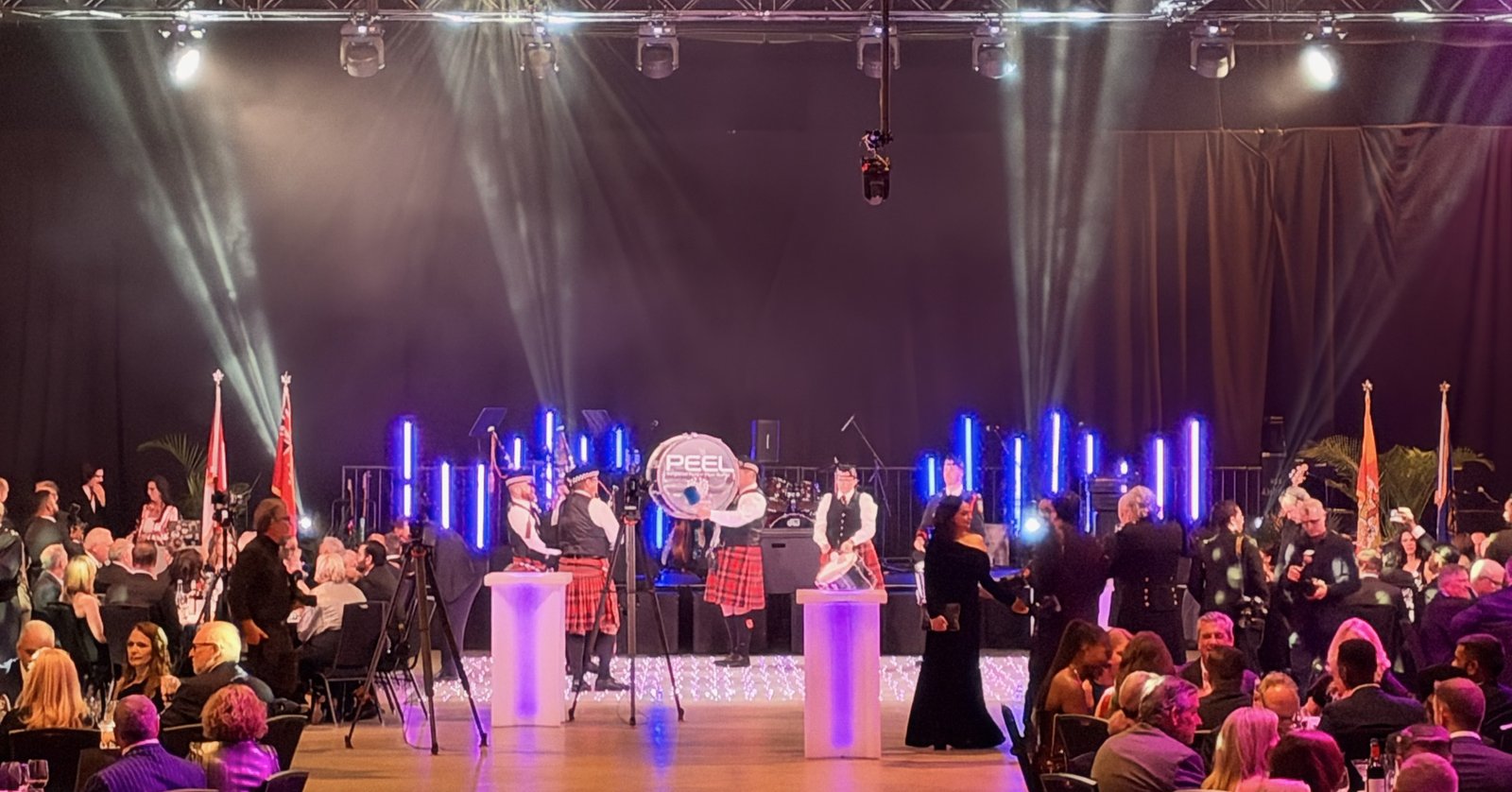
For a marketing director or event planner, there is no feeling quite like the cold sweat that hits when the CEO walks on stage and the microphone doesn't work. Live events are high-wire acts without a net. When something goes wrong, it happens in front of your most important clients, investors and employees.
At FPC, we've engineered over 600 show days across North America. We know that the difference between a disaster and a smooth show isn't luck. It's redundancy, preparation and having the right people at the mixing console. Here are the top 5 live event disasters and how we prevent them.
1. The Dead CEO Microphone
The Disaster: The keynote speaker steps up to deliver the most important presentation of the year, opens their mouth and nothing comes out. The audience shifts awkwardly while a technician scrambles onto the stage.
The Prevention: We never send a VIP on stage with a single point of failure. Every keynote speaker is double-miced. We run a primary lapel or headset microphone and a secondary backup mic on a completely different frequency channel. If the primary mic battery dies or the frequency drops, our Audio Engineer smoothly switches to the backup channel before the audience even notices.
2. The "Black Screen of Death"
The Disaster: The presenter clicks to the next slide and the massive LED wall goes black or displays a generic laptop desktop background.
The Prevention: We utilize professional presentation switchers (like the Barco Event Master series) and solid signal flow architectures. We never connect a laptop directly to a screen. We run primary and backup presentation machines synced simultaneously. If the main presentation laptop crashes, the video operator switches to the backup machine in a fraction of a second.
3. The Live Stream Buffer
The Disaster: Thousands of remote attendees are watching your global town hall when the video freezes, buffers endlessly and eventually drops the connection.
The Prevention: Internet at venues is notoriously unreliable. FPC prevents streaming failures by employing network bonding solutions. We combine hardwired venue internet with dedicated cellular LTE/5G connections. If the venue's network goes down, the stream automatically fails over to the cellular connection without dropping a single frame.
4. The Unreadable Slides
The Disaster: The presenter has beautifully designed slides with small fonts and dark backgrounds that look great on a laptop but are completely invisible to attendees in the back row of a brightly lit ballroom.
The Prevention: Prevention starts in pre-production. As your production consultants, we review your content weeks in advance. We calculate screen size relative to the room dimensions (the 4/6/8 rule) and ensure the contrast ratios and font sizes are appropriate for the specific LED wall or projection setup we have engineered.
5. The Chaotic Transitions
The Disaster: A panel discussion ends, the lights stay dark, awkward silence fills the room and the next speaker doesn't know whether to walk on stage.
The Prevention: The absence of a dedicated Show Caller. A rental house will provide operators for equipment, but FPC provides a Show Caller who acts as the conductor of the orchestra. They call every lighting cue, video roll and audio sting over the crew headset, ensuring that the entire technical team operates in perfect synchronization.
Bonus: The Problems Nobody Plans For
The five above are the ones planners usually worry about. These are the quieter ones that cause just as much stress when they show up.
- Feedback and room echo. A hard-walled ballroom can make a perfectly good sound system sound terrible. The fix is a proper speaker placement plan, a sound check with people in the room if possible and an engineer who knows how to tune the space.
- Power trips. Venues have limited circuits, and one overloaded breaker can take down audio and video together. We plan power distribution in advance and keep critical gear on separate circuits.
- Wireless interference. Phones, other events in the building and nearby broadcasts compete for frequencies. We scan the RF environment on site and coordinate frequencies before doors open.
- Last-minute slide changes. The deck that was final on Tuesday changes again an hour before doors. A dedicated playback operator with a clear process for receiving files keeps the changes from turning into mistakes.
- Unclear ownership on show day. When three vendors and the venue each assume someone else is handling a problem, nobody is. One person who owns the technical side of the show removes that gap.
What Planners Can Do Right Now
You don't need to be technical to lower your risk. Send presentations early and in the final format. Ask your AV partner what the backup plan is for the microphone, the playback system and the internet. Insist on a rehearsal with the real slides, the real speakers and the real stage. And make sure there is one person on the production side who can make a decision in the moment. Most disasters are not caused by one dramatic failure. They come from small gaps nobody closed in advance.
Your Insurance Policy
When you hire FPC Events, you aren't just paying for speakers and screens. You are investing in an insurance policy against embarrassment. We obsess over the details so you can focus on your attendees. Let's talk about your next event.